On June 30, 2026, international students of Class 2029 from School of Economics and Management (SEM) visited the Nanchang Zengpintang Aged Liquor Museum. Led by faculty members Shen Qiang, Tao Chunfeng, and Yang Jiangping, this activity aims to help international students gain an in-depth understanding of the cultural heritage and business logic of traditional Chinese industries through on-site visits and exchanges with student representatives from the Institute of Regional and Country Studies at Jiangxi University of Finance and Economics. This initiative reflects the School's ongoing commitment to exploring innovative approaches in international talent development.
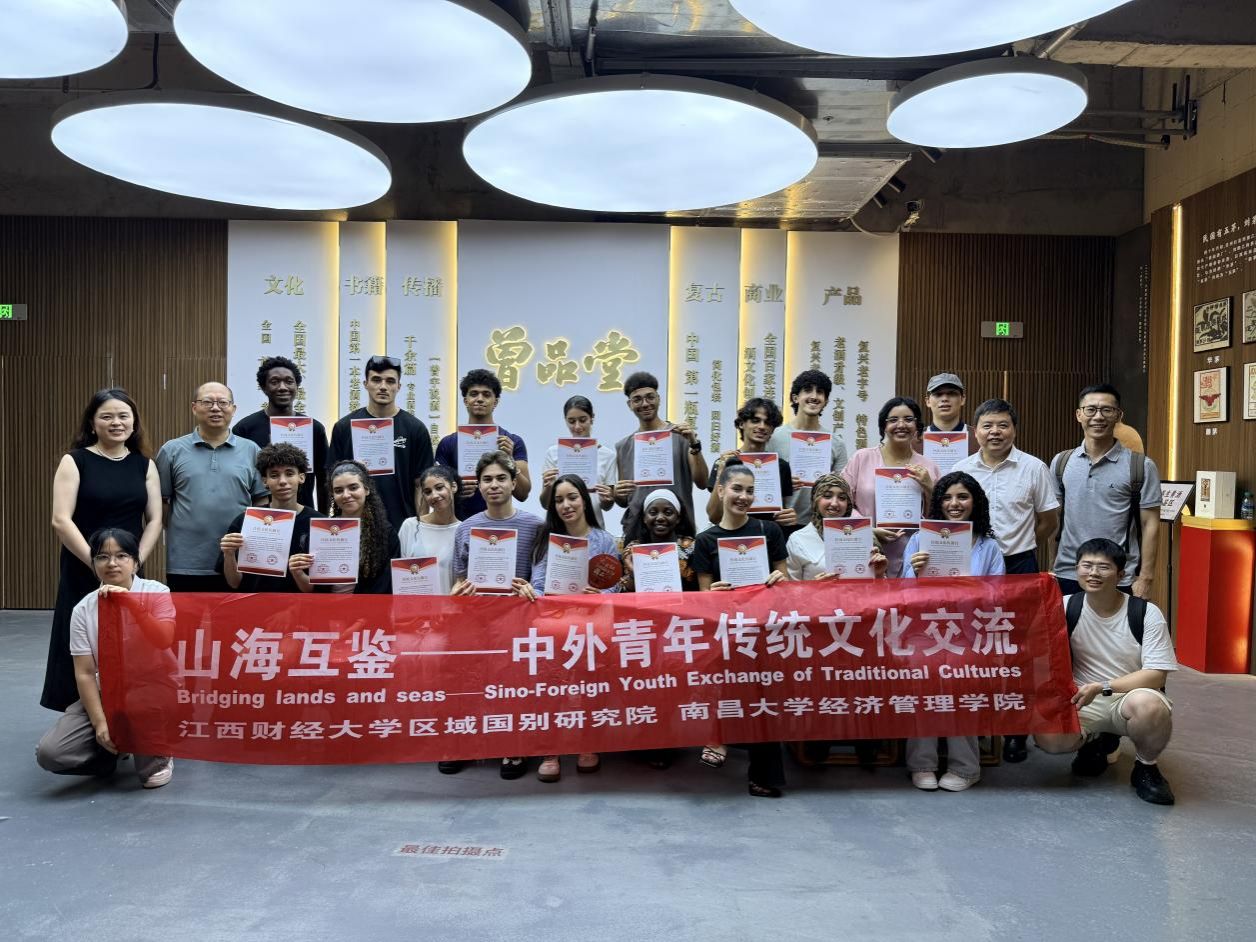
Guided by museum staff, the international students toured exhibitions showcasing the historical evolution and regional diversity of Chinese liquor culture. They gained a clear and intuitive understanding of traditional brewing techniques, the development of wine vessels, and folk liquor-related customs and rituals. During the visit, our faculty and students engaged in meaningful exchanges with student representatives from the Institute of Regional and Country Studies at Jiangxi University of Finance and Economics. The discussion covered a wide range of topics, including the contemporary commercial transformation of traditional cultural resources, brand narrative construction, innovation in consumer scenarios, the market mechanisms of aged liquor collection, and strategies for attracting younger consumers to traditional IPs. The lively atmosphere was filled with dynamic intellectual exchanges and mutual inspiration.
In recent years, SEM has broadened international students' cultural horizons and business perspectives through various initiatives, including building platforms for collaborative learning between Chinese and international students, expanding practical training bases at local enterprises, and optimizing the English-taught curriculum. These efforts are aimed at cultivating globally oriented talents who understand, appreciate, and are committed to China, while possessing strong cross-cultural communication skills and practical management competencies. Mr. Shen Qiang noted, "Taking students beyond the classroom and into the heart of China's industries, enabling them to understand the symbiotic relationship between culture and commerce in real-world settings, is a key direction of the School's international teaching reform."
This field research not only enhanced international students' multidimensional understanding of China's business environment but also provided a platform for meaningful exchange and mutual learning between Chinese and international youth. Looking ahead, SEM will continue to leverage such practical programs to deepen industry-education integration and international cooperation, further enhancing the quality of its international education offerings.